European Higher Education Area
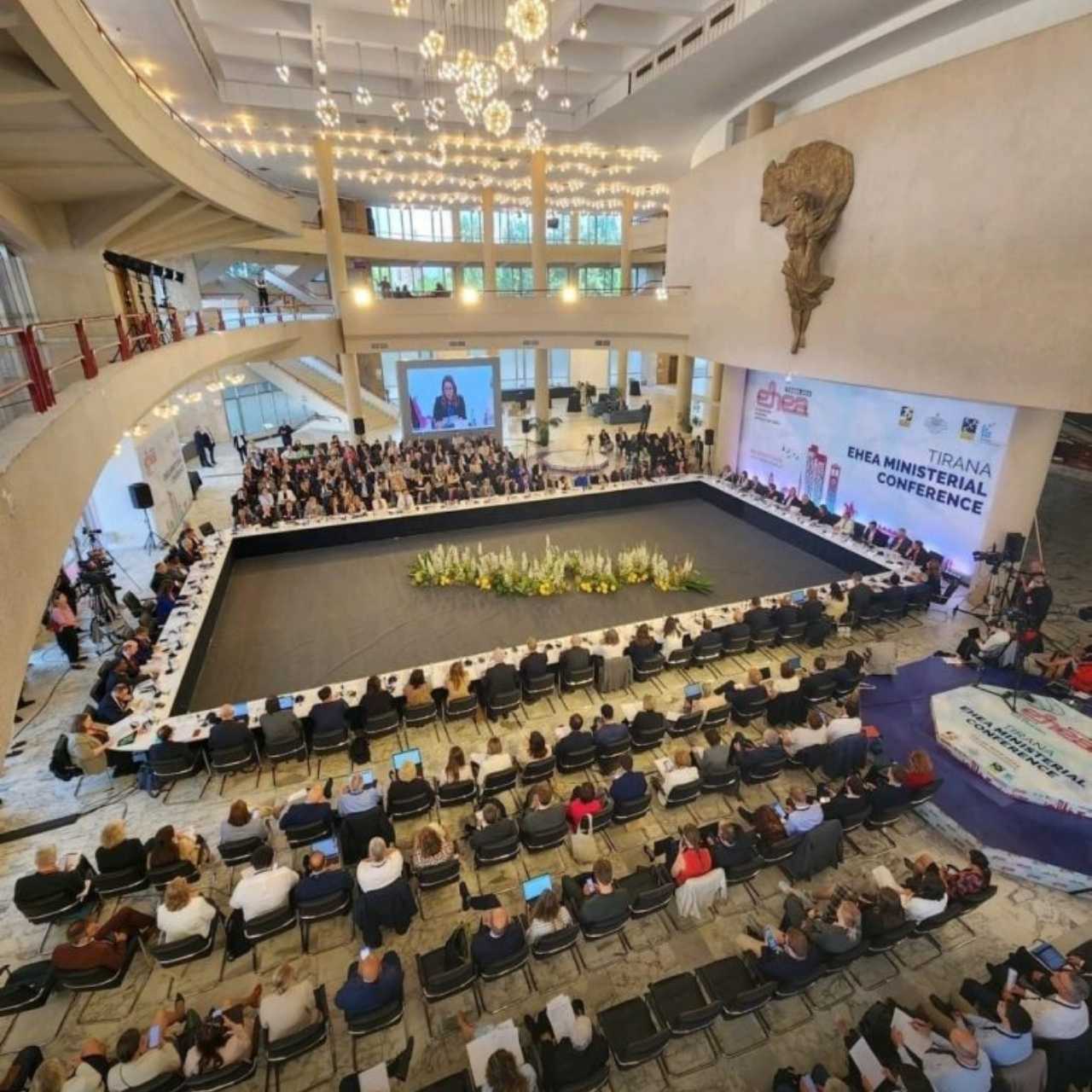
The European Higher Education Area (EHEA) brings together European countries and higher education stakeholders through the Bologna Process, launched in 1999, creating a common framework that makes higher education systems more transparent, compatible and connected across Europe.
Since its launch, the Bologna Process has shaped many of the structures that are now part of everyday higher education in Europe, including the three-cycle degree structure, ECTS credits, qualifications frameworks, recognition arrangements and common principles for quality assurance. These shared tools make it easier for learners to move between institutions and countries, have their learning recognised, and build education pathways across different stages of their lives.
Learn more
Significant issues in the EHEA
Quality Assurance and ESG revision
EURASHE was one of the original co-authors of the Standards and Guidelines for Quality Assurance in the European Higher Education Area (ESG) and is actively involved in their current revision.
Related:
Qualifications frameworks
EURASHE contributes actively to the BFUG’s Thematic Peer Group on Qualifications Frameworks, including work concerning short-cycle higher education, learning outcomes, ECTS, and the use of qualifications frameworks to support more flexible learning pathways.
Related:
ECTS and flexible learning
EURASHE is also involved in the revision of the ECTS Users’ Guide, which is due to be presented for adoption at the 2027 EHEA Ministerial Conference. The revision is particularly important as ECTS increasingly needs to function across a much wider range of learning experiences, including micro-credentials and more flexible forms of learning.
Lifelong learning
EURASHE supports the transformation of higher education towards lifelong learning and greater flexibility in the Bologna Process, essential to respond to the challenges posed by the world of today. We work within the BFUG to connect these different policy areas and to make lifelong learning a structural feature of the EHEA, rather than an additional form of learning provision.
Related:
Role of EURASHE
EURASHE has been directly involved in the Bologna Process since 2001, and is today a consultative member of the Bologna Follow-Up Group (BFUG) together with other stakeholder organisations. This role is an important feature of the Bologna Process, as consultative members bring their experience and perspective directly into policy discussions, helping to connect political commitments with practical implementation. EURASHE uses this position to represent the perspective of applied sciences universities and other professionally oriented higher education institutions.
Our objective is an EHEA that combines common European principles with institutional diversity and gives institutions the flexibility to respond to changing learners, societies and labour markets, while maintaining trust, quality and recognition across Europe.