By Frank van der Zwan-Scholtz, Netherlands Association of Universities of Applied Sciences (Vereniging Hogescholen, NL)
Across Europe, higher education is expected to play a leading role in addressing urgent societal challenges. Climate change, healthcare transformation and digitalisation are not abstract issues; they are complex, persistent and deeply rooted in professional practice. Yet our doctoral systems are still largely built around understanding these challenges, rather than actively changing them. This imbalance is no longer sustainable if Europe wants to deliver real impact.
Traditional doctoral programmes have been highly successful in advancing scientific knowledge. However, they are not designed to intervene directly in complex practice environments. As a result, Europe risks underutilising a crucial part of its knowledge potential: highly educated professionals who are capable of driving change while working at the highest level of expertise. Professional doctorates offer a way forward, but only if they are developed with clarity and ambition. Europe should therefore actively recognise and develop this model as a core part of its doctoral landscape.
Across Europe, similar discussions are emerging. In the Netherlands, the development of the Professional Doctorate (PD) has been deliberately positioned around the concept of ‘intervening in complex practices’. This is more than a design choice; it is a statement about what doctoral-level work should entail in today’s society. Knowledge is not only something we observe and analyse; it is also something we create through action. If doctoral education is only about understanding the world, it will always fall short of changing it.
Professional Doctorate graduates are not only trained as researchers, but also as professionals, innovators and change agents.
This perspective fundamentally shapes the profile of PD graduates. Importantly, this orientation is fully consistent with the European Qualifications Framework (EQF) level 8. The EQF does not only emphasise study and research, but also work, innovation and professional practice as core dimensions of doctoral-level achievement. PD graduates are therefore not only trained as researchers, but also as professionals, innovators and change agents. They are equipped to design interventions, work across organisational boundaries, and realise sustainable improvements in real-world contexts.
Crucially, this does not make the professional doctorate “less academic”. On the contrary, it represents a different, but equally rigorous pathway at the highest qualification level. This comparison inevitably simplifies the diversity within traditional PhD programmes. Of course, there are many PhD trajectories that also engage with professional practice and societal change, but this is typically not by design. The defining difference is that the professional doctorate is explicitly built around this purpose, leading to a different balance of goals and outputs. The PD is explicitly positioned as equivalent to the PhD, but different in orientation, approach and outcomes.
This difference is also reflected in how doctoral-level achievement is demonstrated. Instead of a single traditional dissertation, PD candidates develop a coherent portfolio of outputs. These include, for example, intervention designs, evaluated innovations, research reports and practice-based solutions. Together, these outputs demonstrate their capabilities at EQF level 8.
From a traditional academic perspective, the absence of a monograph or a series of journal publications is sometimes interpreted as a lowering of standards. This assumption is not only incorrect, it actively limits Europe’s capacity for innovation.
From a traditional academic perspective, the absence of a monograph or a series of journal publications is sometimes interpreted as a lowering of standards. This assumption is not only incorrect, it actively limits Europe’s capacity for innovation. A well-designed portfolio does not dilute doctoral requirements; it makes them more visible and more demanding in practice. Candidates must demonstrate not only analytical depth, but also their ability to apply knowledge, justify interventions, and create outputs that are usable beyond academia. In this sense, the professional doctorate strengthens, rather than weakens, the connection between doctoral work and societal impact. By making both the research process and its practical outcomes explicit and accessible, it ensures that knowledge is not only produced, but also shared and used in real-world contexts.
If Europe is serious about strengthening its capacity to address complex societal challenges, it must move beyond incremental adaptations. It needs to embrace professional doctorates as a distinct and fully recognised form of doctoral education – rooted in practice, but academically robust. That requires clear choices. Not every new doctorate label automatically delivers impact. What is needed are programmes that are structurally embedded in professional contexts, that involve sustained collaboration with societal partners, and that focus on iterative intervention rather than one-off analysis.
The message is therefore simple: Europe should not just adopt professional doctorates; it should adopt them properly. This means recognising their distinct added value, ensuring their quality and level, and creating the policy space for them to flourish alongside traditional PhD programmes. A future-proof doctoral system will not be built on one model alone. It requires diversity in approaches, clarity in positioning, and the courage to innovate. Professional doctorates are not a peripheral development: they are essential to the future of doctoral education in Europe.
View also:
- Community Voice article “Applied doctorates gaining momentum across Europe” (February 2026).
- EURASHE webinar “Doctoral Education in Universities of Applied Sciences” (March 2025).
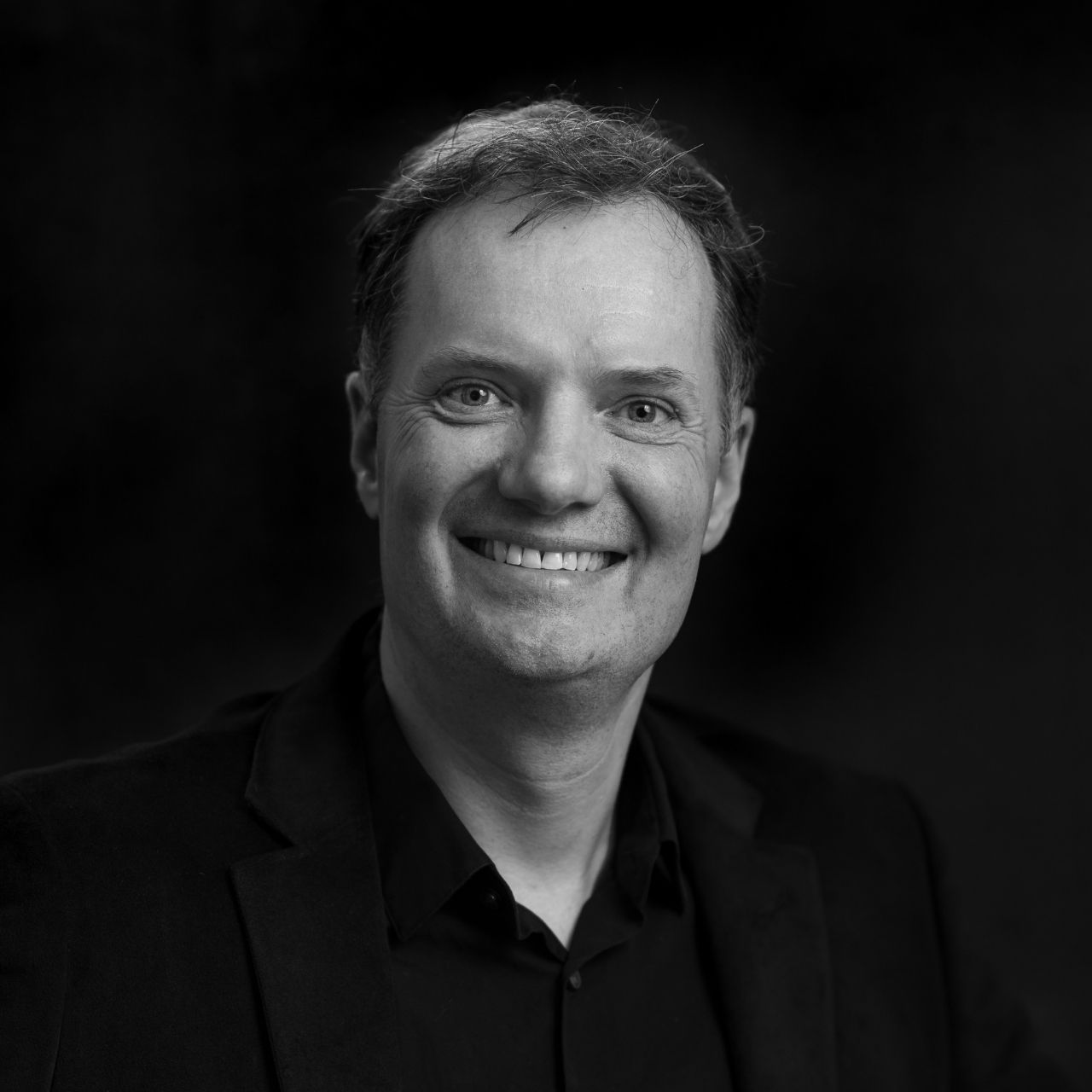
Frank van der Zwan-Scholtz
Programme Manager Professional Doctorate, Netherlands Association of Universities of Applied Sciences
Frank is responsible for the national development and coordination of the Professional Doctorate at Dutch UAS’s and works on policy, governance and quality assurance. Before this role, he worked for many years in higher education and research policy, with a strong focus on practice based research and innovation.