
On 13 October, EURASHE, together with Friends of Smart Specialisation (FoSS) and the Centre for European Policy Studies (CEPS), hosted a discussion exploring whether the EU’s next Multiannual Financial Framework (2028–2034) is sufficiently responsive to place-based and local challenges.
With negotiations on the EU’s next Multiannual Financial Framework (MFF) for 2028–2034 underway, the proposals on the table mark a significant departure from previous programming periods. Rather than the traditional Operational Programmes, Cohesion Policy is set to be structured around National and Regional Partnerships Plans. Centrally managed programmes such as Horizon Europe and Erasmus+ will be increasingly harnessed to achieve wider EU policy objectives, joined by a new European Competitiveness Fund with a large budget.
The new framework is designed to be more agile: better able to respond to rapid economic and technological change, as well as global shocks and uncertainty. But is it responsive enough to place—the cities and regions where everyday life shapes, and is shaped by, the European economy?
Keynote: A warning against place-blind industrial policy
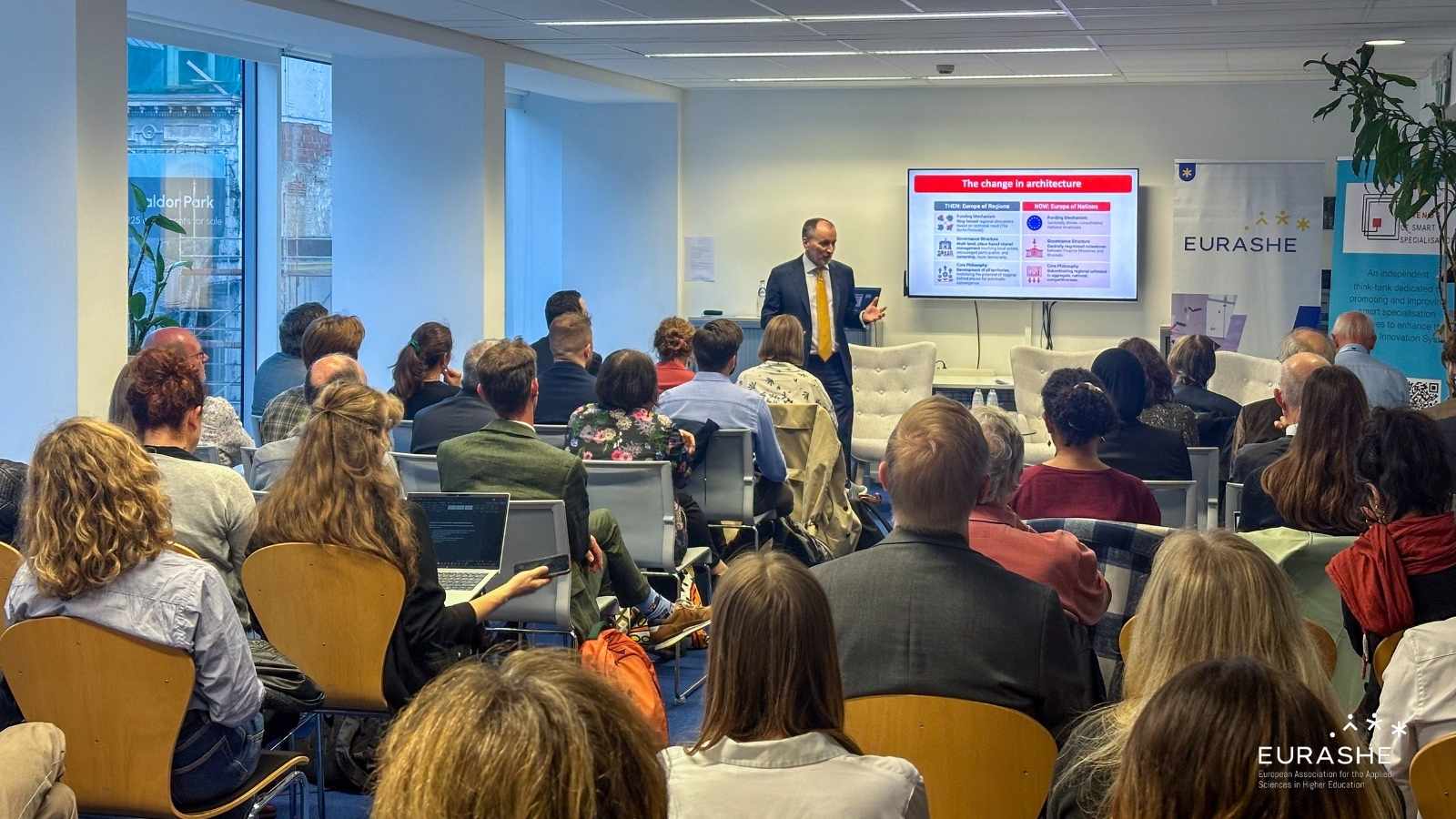
In his keynote speech, Prof. Andrés Rodríguez-Pose delivered a stark warning: “Europe may be betting on horses without much chance of winning, while forgetting those that could perform well”.
Prof. Rodríguez-Pose argued that the MFF discussions come at a moment of high stakes for Europe, amid multiple ongoing crises—and that the proposal on the table might not, in the end, make Europe more competitive, secure or autonomous.
At the heart of his critique is a fundamental shift in the EU’s approach: from a “Europe of the Regions”, built on structural funds, multi-level governance, shared management and the voice of local stakeholders, to a “Europe of the Nations” in which funds are centralised, processes are less transparent, and local actors and stakeholders lose their say. The proposal’s performance-based system, tying investment to reforms, accelerates this shift.
Europe may be betting on horses without much chance of winning, while forgetting those that could perform well.
This is a risky bet, he warned. Europe would be investing in sectors where it lacks comparative advantage. Most regions stuck in the “development trap” are in fact middle-income regions, and the key to their development is to build on what they already have, rather than build from scratch. Much of Europe’s recent novelty and dynamism has come not from the usual capital city suspects—yet by concentrating investment top-down in major hubs and overlooking the growing potential of other regions, policy neglect leads to a decline in services and unfulfilled promises, which in turn fuels euroscepticism.
Concluding his speech, Prof. Rodríguez-Pose proposed two solutions:
- Ensure that those at local level have a say in the policies and investments that affect them;
- Invest in sectors where Europe can be a leader rather than a follower, and where its regions have the potential to compete.
Combining these two actions, he concluded, would make for a far more dynamic, prosperous, competitive, resilient and secure Europe—one that is also more inclusive and sustainable.
Panel discussion: What place for regions in the next MFF?
The panel discussion that followed brought together perspectives from the European Parliament, the European Commission and the think tank community.
Lina Gálvez Muñoz, Member of the European Parliament, stressed that the priority is not only a bigger budget, but a better organised one. Her group opposes the Irish Presidency’s proposal, rejecting the nationalisation of cohesion policy and the shift away from regional governance: without a change in governance and structure, “we are playing the extreme right’s game”. Geographical disparities must be tackled head-on: researchers in peripheral regions are often plugged into the productive logic of other regions, fuelling brain drain and inequality, while living in regions with fewer opportunities is a threat to democracy. The widening programme is a good start, but place-based approaches are needed in Horizon Europe, too.
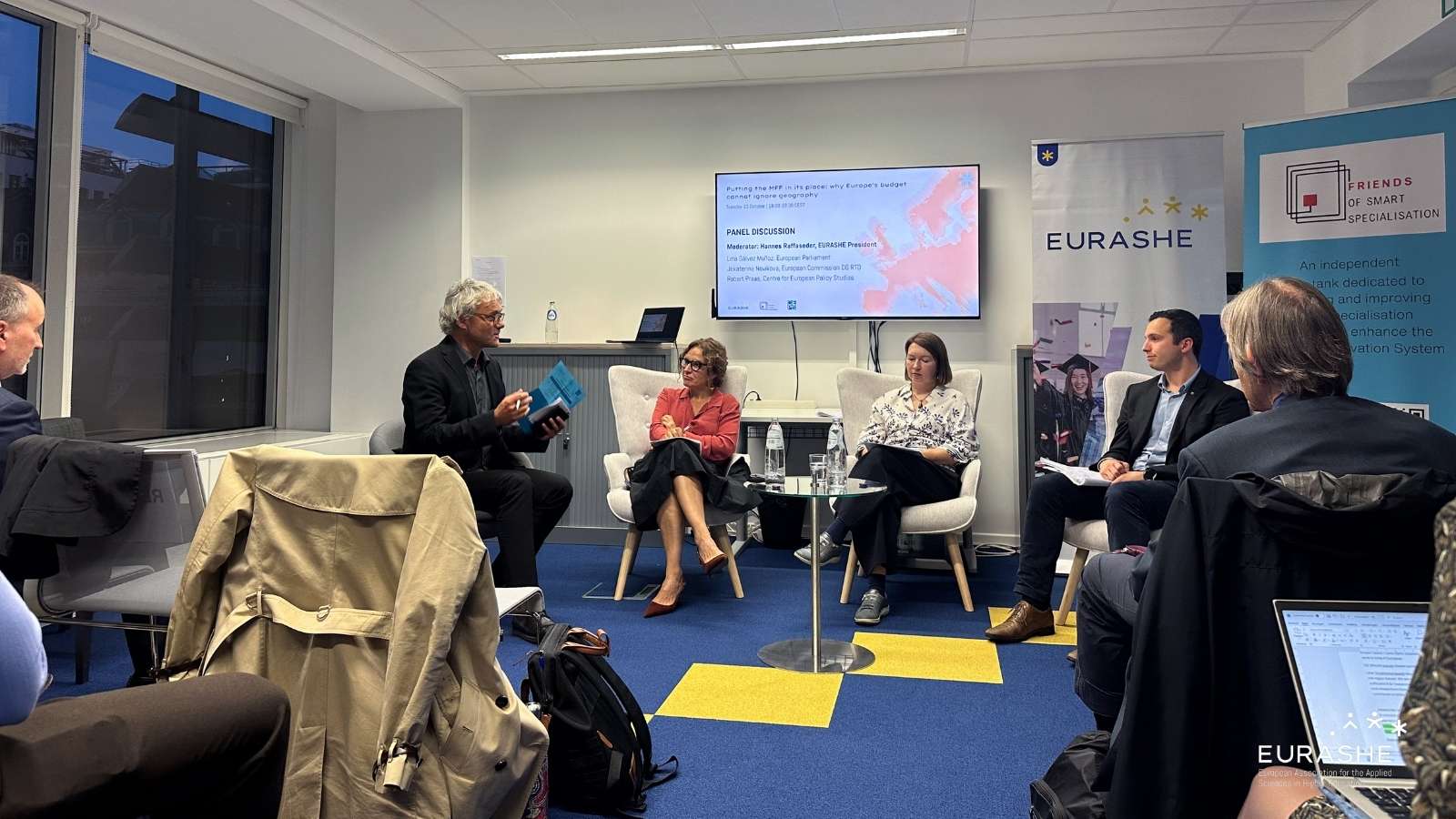
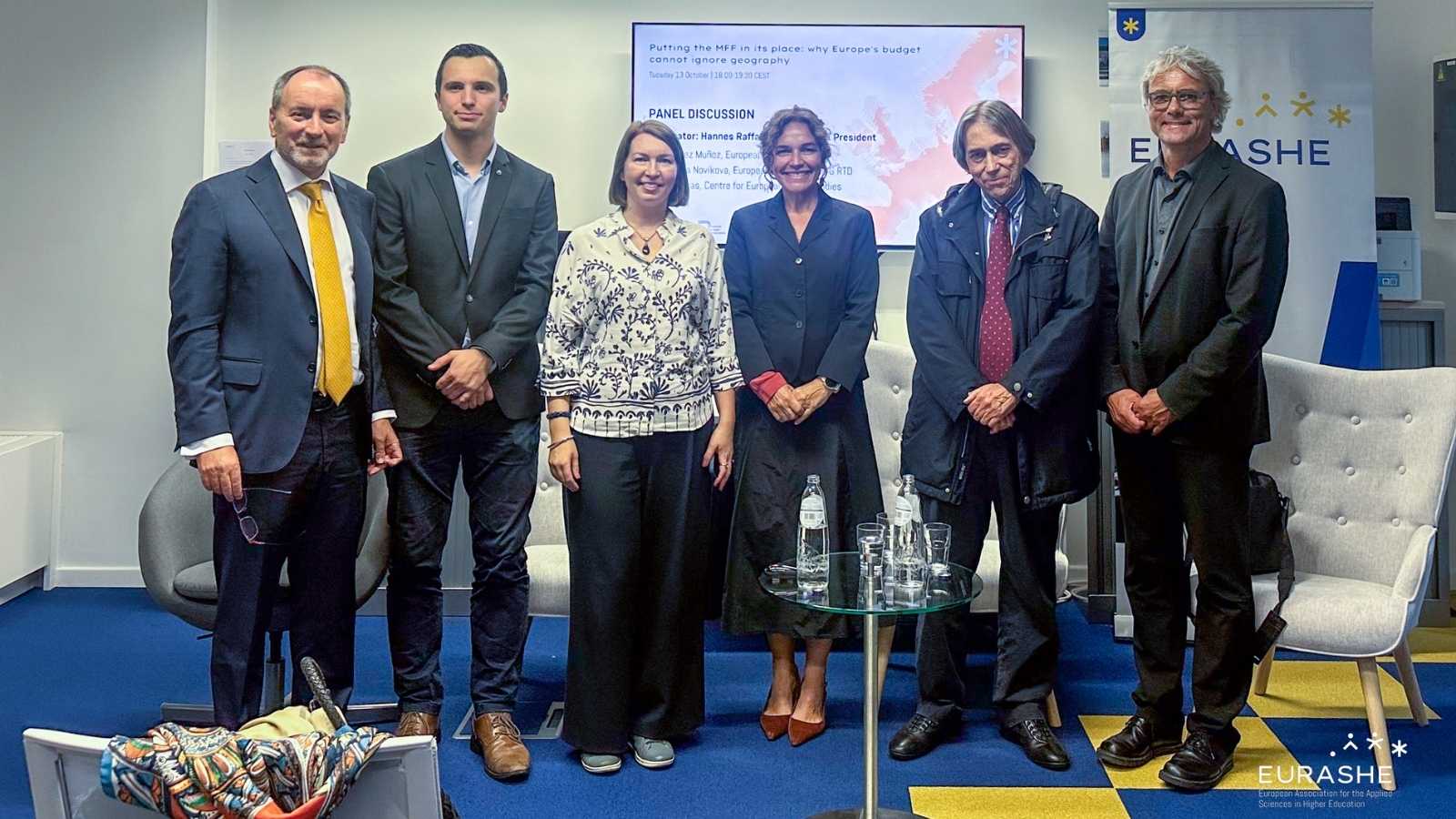
Jekaterina Novikova, Deputy Head of the Innovation Policy and Access to Finance Unit at the European Commission’s Directorate-General for Research and Innovation, acknowledged that the current approach is not working harmoniously, while also pointing out that there will never be enough money for everything, so investment needs to be precise and focused. Nobody opposes diversity, she noted, pointing to the European Innovation Ecosystems initiative, the New European Innovation Agenda, and the Interregional Innovation Investments (I3) instrument as good examples. The lesson for the future, she concluded, is to think about how to bring such initiatives together from the very onset of policy design, as achieving perfect synergies is difficult when instruments have different legal bases, member states and application structures.
Robert Praas, Data Scientist at CEPS, offered a concrete illustration of why regional ecosystems matter: ASML in the Netherlands is not just that one company, but the 3,000 suppliers — many of them European — that play an important role in its success. Artificial intelligence, he argued, is an opportunity for Europe, provided regional and cross-country collaboration is strengthened to develop the sector. His challenge to the panel: how can the budget be increased, and how can smart specialisation be put at the forefront and made the policy, rather than an optional part of the menu, in the next MFF? AI should be used smartly, connected to existing regional strengths through smart specialisation.
Key takeaways
Place-blind policies carry real risks. A top-down industrial policy combined with a national approach to cohesion policy is likely to concentrate investment geographically, fuelling polarisation and euroscepticism.
From a “Europe of the Regions” to a “Europe of the Nations”. The next MFF risks centralising funds, reducing transparency and silencing local actors and stakeholders—with trickle-down benefits for less developed regions far from guaranteed.
Experimentation and self-discovery should guide industrial policy. Europe should invest in sectors where it can lead rather than follow, building on existing regional strengths rather than building from scratch.
Governance matters as much as budget. Without a change in governance and structure, nationalisation of cohesion policy risks feeding the extreme right and undermining democracy in regions with fewer opportunities.
Proven place-based instruments deserve more budget, not less. European Innovation Ecosystems, the widening programme and the I3 instrument demonstrably create value at regional level and should be designed together from the outset to achieve real synergies.
Regional ecosystems are Europe’s competitive strength. From ASML’s 3,000 suppliers to smart specialisation strategies, regional and cross-country collaboration – including on AI – is where Europe’s comparative advantage lies.
Looking ahead
As negotiations on the next MFF continue, the message from this discussion was clear: an agile EU budget is welcome, but agility must not come at the expense of local realities. If the Union wants to meet its competitiveness and cohesion objectives simultaneously, the cities and regions of Europe must be treated not as passive beneficiaries, but as active partners in delivering its priorities. As EURASHE President Hannes Raffaseder, who moderated the panel discussion, put it: